
What is Sweat Equity, Really?
Updated: Apr 20
When a family partners with Habitat for Humanity, they don’t simply purchase a house. They build it — with their own time, effort, and heart. That investment is what we call sweat equity, and it’s one of the most unique and meaningful parts of the Habitat model.
Sweat equity goes far beyond a simple requirement. It is a cornerstone of Habitat’s mission, helping families develop pride in homeownership, learn new skills, and build lasting connections with their community. But what does sweat equity really mean, and how does it work here at Northwoods Habitat for Humanity?
The Purpose of Sweat Equity
The idea behind sweat equity is simple: by working alongside volunteers, staff, and even other partner families, future homeowners develop a deep sense of ownership in their home and appreciation for the process.
Habitat for Humanity International outlines three main purposes for sweat equity:
Partnership: Families work shoulder to shoulder with volunteers, staff, and neighbors, building relationships and community.
Pride: When a homeowner has literally put their hands into the walls of their home, they move in with a greater sense of pride and responsibility.
Skill Development: Families learn about construction, home maintenance, budgeting, and homeowner responsibilities — skills that serve them for life.
As one Habitat family put it:
“We did what was asked from us and started working vigorously our sweat equity hours… The very long hours between working on sweat equity and working almost 70-hour weeks, all in addition to building a house of our own, was a lot to manage. But you literally have nothing to lose — and everything to gain.”

How Many Hours Are Required?
Every Habitat affiliate sets its own sweat equity policy, but HFHI requires a minimum of 200 hours per household, including at least 125 hours spent directly on construction. Affiliates may require more depending on their program.
At Northwoods Habitat for Humanity, we require each adult in the household to complete 300 hours of sweat equity before they can move into their home.
It’s a big commitment, but it is achievable — and life-changing.
Different Ways to Earn Sweat Equity
Sweat equity doesn’t just happen on the construction site. We recognize that not every homeowner has the same abilities, schedules, or circumstances, so we provide multiple ways to contribute.
Partner families earn sweat equity hours through:
Construction work on their own home and on the homes of other partner families.
ReStore shifts, such as stocking shelves, organizing donations, and helping customers.
Administrative tasks, like preparing mailings or helping in the Habitat office.
Homeowner education classes, where families learn about budgeting, home maintenance, and financial management.
Community outreach and events, supporting Habitat’s mission in public ways.
Family and friends hours: Each family can enlist relatives or friends to contribute up to 50 hours toward their requirement.
This flexibility ensures that everyone can participate, regardless of physical limitations or work schedules, while still keeping the spirit of partnership alive.

Sweat Equity in Action: examples from the Summer of 2025
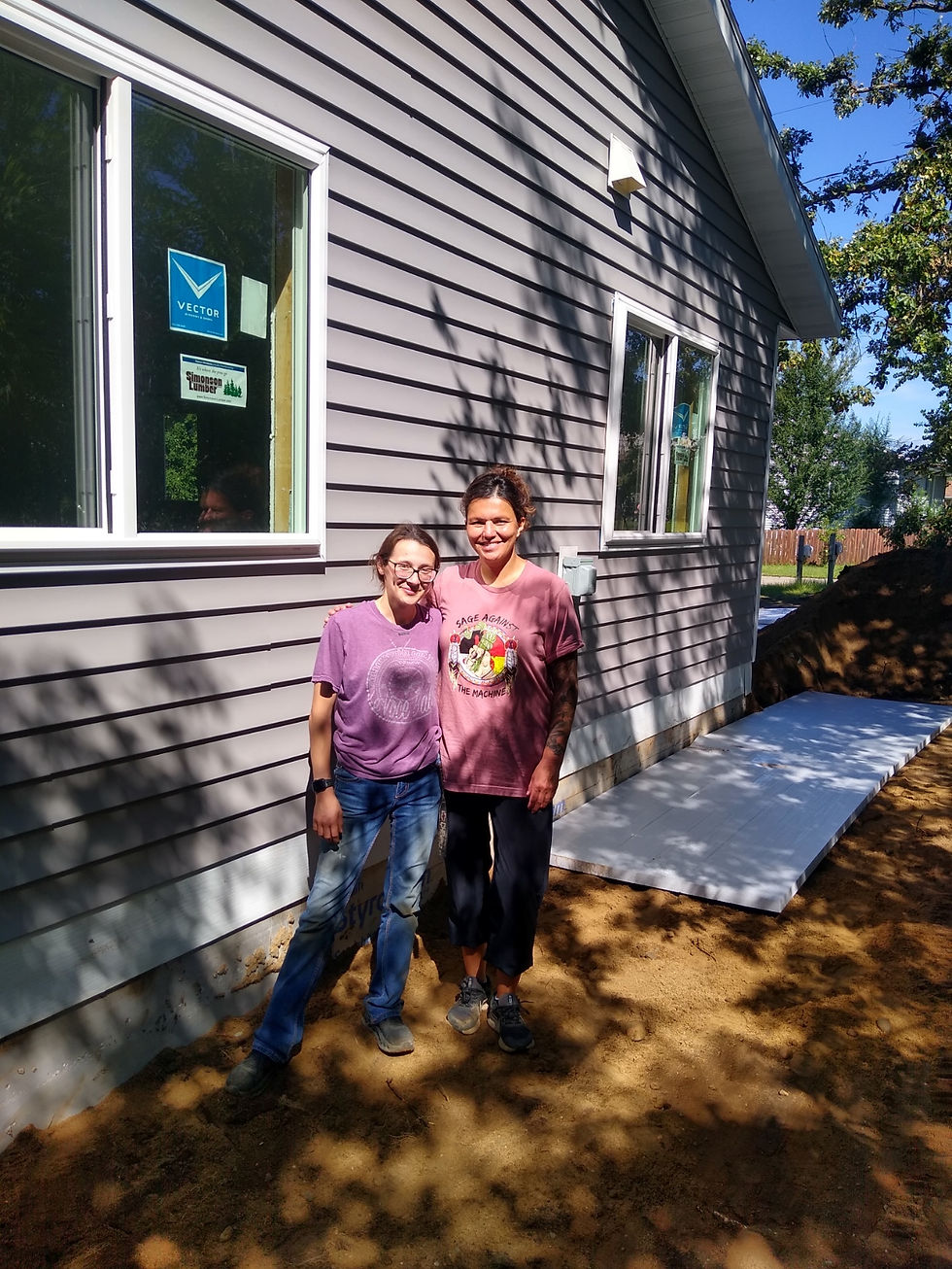
Right now in Bemidji, our two partner families — Jozlynn and Jamethin, and Rachel — are putting sweat equity into action every week.
Both families have logged significant hours at the ReStore, helping to keep the store running smoothly and supporting Habitat’s mission in the process.
They’ve also completed hours through administrative tasks, like preparing mailings and office support.
Most importantly, they’ve spent many hours building their own homes and each other’s homes. One powerful moment came when Rachel spent the day working on Jozlynn’s house — a beautiful reminder that Habitat is truly about families helping families.
These moments show the heart of sweat equity: it’s not just about earning hours, it’s about building relationships, working together, and investing in a stronger community.
The Challenge and the Reward
Sweat equity is not easy. Families often balance the requirement alongside full-time jobs, raising children, and other responsibilities. Some even take vacation days to put in hours on their homes.
As one future Habitat homeowner said:
“It’s a privilege to see your house going up.”
Another reflected:
“It’s the best feeling in the world!”
It’s hard work, but it’s also incredibly rewarding. When dedication day arrives and families receive the keys to their home, they know they’ve truly earned it. They’ve put their sweat, energy, and love into the walls around them.
More Than a House
At the end of the day, sweat equity is about more than meeting a requirement. It’s about transformation — of homes, of families, and of communities.
Through sweat equity, families gain:
A deeper connection to their home
New friendships and support networks
Skills that will serve them as long-term homeowners
A powerful sense of pride and accomplishment
And our community gains too — by seeing families achieve stability and self-reliance through the power of partnership.
A Community Effort
Sweat equity also reminds us that no family builds alone. Each hour logged by a partner family is multiplied by the support of volunteers, staff, donors, and community members. Together, we create a ripple effect of hope and opportunity.
As one Northwoods Habitat family put it:
“I’ve learned that there are a lot of bad things that can happen in life. But I’ve also learned there are always a lot of people willing to help, even if you’re total strangers.”
Conclusion
So, what is sweat equity, really?
It’s a commitment. It’s a challenge. It’s an opportunity. And most of all, it’s a partnership — one that transforms lives.
When you see Jozlynn, Jamethin, and Rachel swinging hammers, stocking shelves at the ReStore, or supporting each other on the build site, you’re seeing sweat equity in action. And when they finally walk through the front doors of their new homes, they’ll know they didn’t just receive a house. They built it — one hour, one nail, one act of love at a time.


Comments